.png)
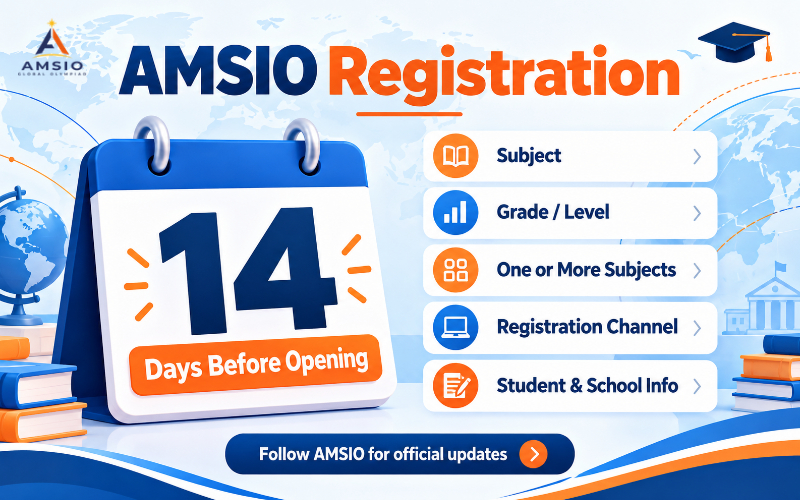
Start with the subject you want to enter
AMSIO offers four competition subjects: Mathematics, Science, Language, and Computational Intelligence. Mathematics, Science, and Language are available for students from Grades 1–12, while Computational Intelligence begins from Grade 3. Rather than choosing a subject because it seems more difficult or more impressive, start with the way the student naturally likes to think. Mathematics may suit students who enjoy numbers, patterns, and logical relationships. Science is a good fit for those who like asking how and why things happen. Language looks beyond vocabulary alone and includes reading, grammar, critical reading, and inference. Computational Intelligence brings together areas such as algorithmic thinking, computer science, AI, programming, and data science. A good subject choice should feel challenging, but also relevant to the student’s interests and current strengths.
Check the correct grade or level before registering
Once the subject is clear, the next step is to check which grade or competition level applies. AMSIO does not use one single level structure across all four subjects. Mathematics has individual grade-level papers, while Science and Language are arranged by grade bands. Computational Intelligence is divided into three levels: Level 1 for Grades 3–5, Level 2 for Grades 6–9, and Level 3 for Grades 10–12+. This is worth checking before registration day rather than at the last minute. The level determines not only which paper a student takes, but also the number of questions, test duration, and in some cases whether a practical section is included. Knowing the correct level early also gives students time to look at the right exam structure and prepare for the format that actually applies to them.
Decide whether to enter one subject or more
AMSIO allows students to register for one or more subjects, including Mathematics, Science, Language, and Computational Intelligence, so families can choose a combination that matches each student’s interests and learning goals. AMSIO Olympiad Handbook 2026 The handbook also confirms that participants may enter multiple subjects across the competition rounds. That does not mean choosing more subjects will automatically create a better experience. Some students may prefer to focus on one subject they genuinely enjoy, giving them more time to explore it in depth. Others may feel comfortable taking on two or more subjects because they enjoy different areas and have enough time to prepare without feeling overloaded. Before deciding, consider three things: interest, current strengths, and realistic preparation time. These questions are usually more useful than simply asking how many subjects a student is allowed to enter. The aim is to choose a combination that feels challenging and worthwhile, while still leaving enough space for students to prepare with focus and confidence.
Find out which registration channel applies to you
It is also useful to know how you will register before the official registration period begins. According to the AMSIO Handbook, schools and institutions may register through AMSIO International or the relevant National Partner. Students can then follow the enrollment process provided by their school or organizer. Individual registration through the AMSIO online system is also included in the official registration guidance. This means the exact process may not look identical for every participant. A student registering through a school may follow different steps from someone using an individual registration route. Before the opening date, check which route applies to you and where the official instructions will be published. That way, when registration starts, you already know where to go and what process to follow rather than searching for the correct channel at the last minute.
Have the student and school information ready
The final thing to prepare is simple but important: basic student and school information. Before registration opens, have the student’s full name, date of birth, current grade or division, selected subject or subjects, and school information ready. If the registration route requires a school code or another organizer-provided detail, keep that information available as well. It is also worth checking the spelling of names and confirming the grade and subject choices before anything is submitted. These details may seem routine, but they are part of the student’s official registration information. Preparing them in advance does not take much time. It simply removes one more thing to deal with once the registration process begins and helps the whole process move more smoothly.
Why is it worth preparing two weeks early?
Preparing early does not mean students need to start filling out forms before registration officially opens. The point is simply to separate the decision-making stage from the registration stage. If the subject, level, number of subjects, registration channel, and basic information are already clear, there will be far fewer questions to solve when the portal or local registration process becomes available. Parents can focus on checking the official instructions, while students can begin looking more closely at their chosen subject and exam format. It also gives families time to discuss choices properly rather than making them quickly on registration day. A little preparation now can make the next step feel much more straightforward.
Conclusion
Preparing early is less about completing registration ahead of time and more about giving students and families the space to make thoughtful choices. When the practical details are already clear, students can enter the registration period with fewer distractions and more confidence about the path they have chosen. Once registration is complete, the focus can shift from administration to preparation, exploration, and getting ready for the academic challenge ahead. AMSIO’s official registration process includes both institutional and individual registration routes, depending on the participant’s situation. Follow AMSIO for official registration announcements, deadlines, and updates for your country or region.